Let us know how we can help
Sales & Pricing
Speak to a rep about your business needs

Help & Support
See our product support options
General inquiries and locations
Contact us


Original Research
2026 BMC Mainframe Survey Report
How AI is driving the next era of mainframe transformation

Chapter 01
Executive summary
For the past 21 years, BMC has surveyed the mainframe community on the state of the platform, trends in practices and usage, future plans, and more. Results of the 2026 BMC Mainframe Survey show that the platform remains an engine of growth and innovation, with artificial intelligence (AI) acting as a catalyst for its next era of transformation. Survey results show the approach to AI on the mainframe has shifted from experimental to operational, focusing on trust, governance, and measurable outcomes.
This shift to an operational approach is accompanied by a shift from enthusiasm to pragmatism. Organizations investing in agentic mainframe management, preferring to use AI as an advisor, alerting users to issues and recommending next steps, but not yet trusted to complete those steps autonomously. Interestingly, millennial respondents are significantly more likely than other age groups to trust AI to complete actions and leverage AI for documentation and knowledge transfer. Across every discipline, organizations are investing in AI, automation, trusted data, governance, and modernization to improve operational resilience, accelerate innovation, and unlock new business value. The survey shows that the mainframe is evolving from a mission-critical platform into an intelligent enterprise platform that powers the next generation of digital business.
Confidence in the mainframe remains near record highs, with 94 percent of respondents seeing it as a long-term platform or a platform for new workloads. Likewise, 94 percent of respondents say their organizations are continuing to invest in the mainframe. Extra-large shops (greater than 50K MIPS) are significantly more likely to increase investment than small (less than 1,000 MIPS) and medium (between 1,001 to 10K MIPS) shops.
While AI draws attention across the IT landscape, organizations aren’t replacing mainframe investment with AI investment—they continue to optimize the platform, including it in their AI infrastructure.
Growth
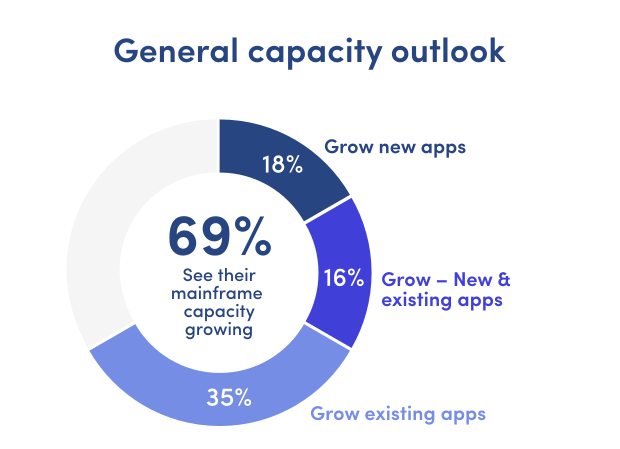
The growth outlook for the platform also remains strong, with 69 percent of respondents saying that their organization’s general-purpose capacity is growing, driven by existing mainframe applications and new apps that access mainframe data.
Eighty-three percent of respondents report that transaction volume has increased or remained the same over the past year, with 77 percent saying the same for data volume and 83 percent reporting steady or increased numbers of databases. Extra-large shops lead the way in mainframe activity, with more than 65 percent reporting increases in all three of these activities.
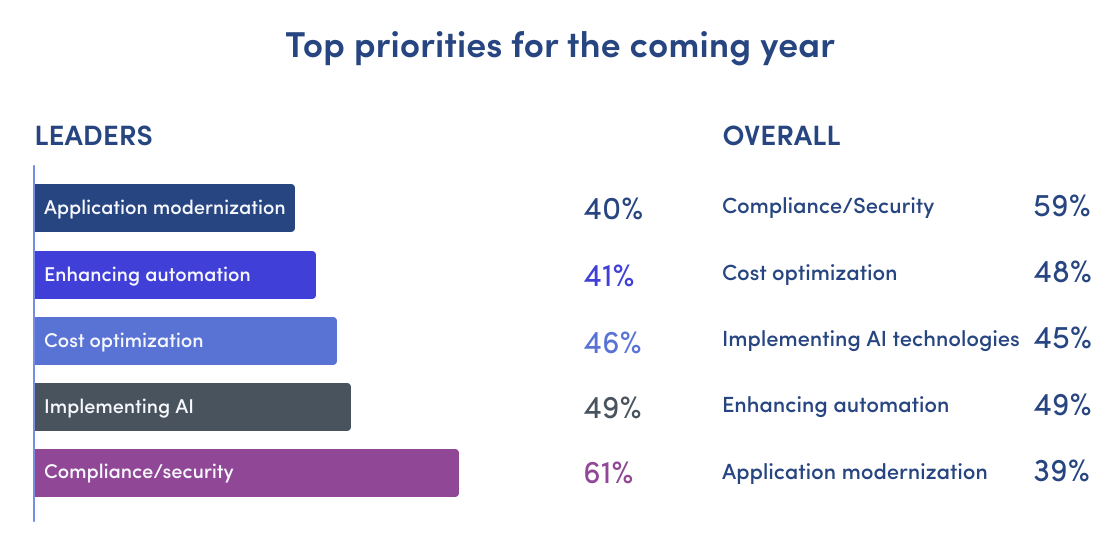
While organizations are focusing on the same top priorities as in 2025, the use of AI is playing a part in the evolution of disciplines across the mainframe. Leaders—those who say the mainframe will grow and attract new workloads and expect their organization’s number of MIPS deployed to grow in the next 12 months—are leading the way.
Leaders
The organizations that will lead the next era of mainframe innovation will not be caretakers, but those who are embracing a strategic approach to AI and other emerging technologies to modernize operations, accelerate productivity, and unlock new business value. Those who take a hesitant approach to AI will risk watching competitors pull ahead.
Chapter 02
From AI enthusiasm to pragmatic adoption
For the past several years, AI has been a major subject of discussion, planning, and investment across the mainframe community, with AI, machine learning (ML), and generative AI (GenAI) tools used for a variety of tasks. AI has moved from experimentation to strategic planning, with mainframe organizations seeming to take a more pragmatic approach.
AI as an advisor, not yet an executor
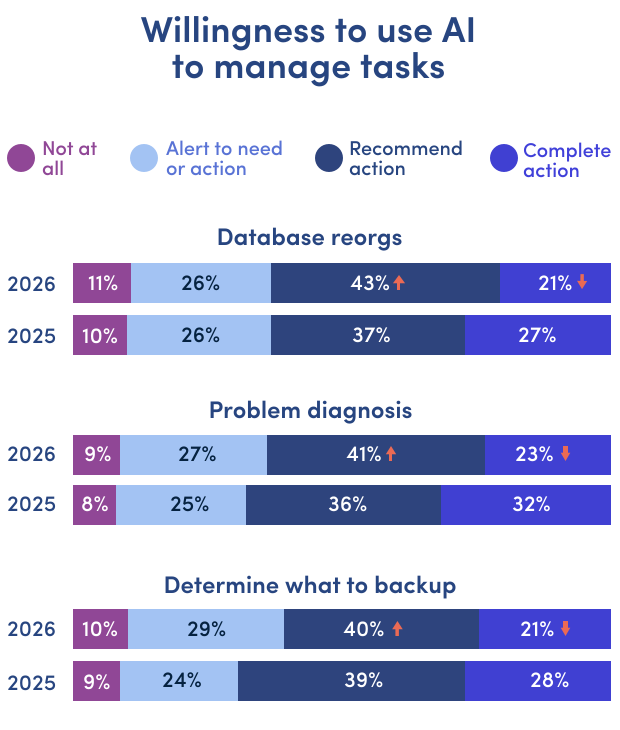
That pragmatism is visible in the kinds of responsibilities organizations are currently willing to give AI. After the initial excitement and hype concerning AI capabilities, mainframe executives seem to be adopting a cautious realism, turning to the technology to act as an advisor, but not an executor. In short, AI hasn’t gained the full trust of the mainframe world, prompting a “human-in-the-loop” approach.
AI is becoming an increasingly important tool in mainframe transformation, but the market is becoming more pragmatic as expectations mature. AI use has shifted from experimental to operational; organizations have gone from asking how they can use AI to asking where they can trust it, how it can be governed, and where it delivers measurable value.
As the chart shows, willingness to use AI to complete actions is trending downward, replaced with a desire for it to recommend actions to be undertaken by a human operator.
Chapter 03
AI concerns and challenges
As may be expected, the cost of moving AI integration from pilot to production is top concern. The trend away from experimentation and toward pragmatic, strategic planning stems in part from these concerns. Applying AI in a sensible way, focusing on outcomes that bring business value can help justify these costs.
Also ranking as top AI implementation concerns are security, regulatory/compliance, and data integration.
Adopting the right tools will help ensure the validity and security of AI-based solutions and organizational data.
Adopting the right tools will help ensure the validity and security of AI-based solutions and organizational data.
Chapter 04
Digital certificates—an area to watch
As organizations embrace AI and other emerging technologies, maintaining strong security and compliance practices remains essential. Digital certificate management is one area where many organizations still have an opportunity to improve efficiency and reduce risk.
With CA/Browser Forum requirements reducing the lifecycle of TLS certificates from 398 days in 2025 to 200 days in 2026 and scaling down to a lifecycle of 47 days by March 2029, organizations must prepare for a significant increase in certificate issuance, renewal, and monitoring activity. As the integration of AI-based tools and use of AI agents increases, so will the need for more, and more frequently renewed, digital licenses, likely reaching a volume to which manual management efforts cannot scale and a complexity that exposes the limitations of home-grown automation solutions.
At the same time, connections with AI-based applications will continue to increase as the technology is further integrated with the mainframe. While ensuring secured connections for both humans and applications is a critical piece of the mainframe security puzzle, the 2026 BMC Mainframe Survey shows that the majority of respondents are using either in-house automated solutions to manage their organization’s digital certificates or are managing certificates manually.
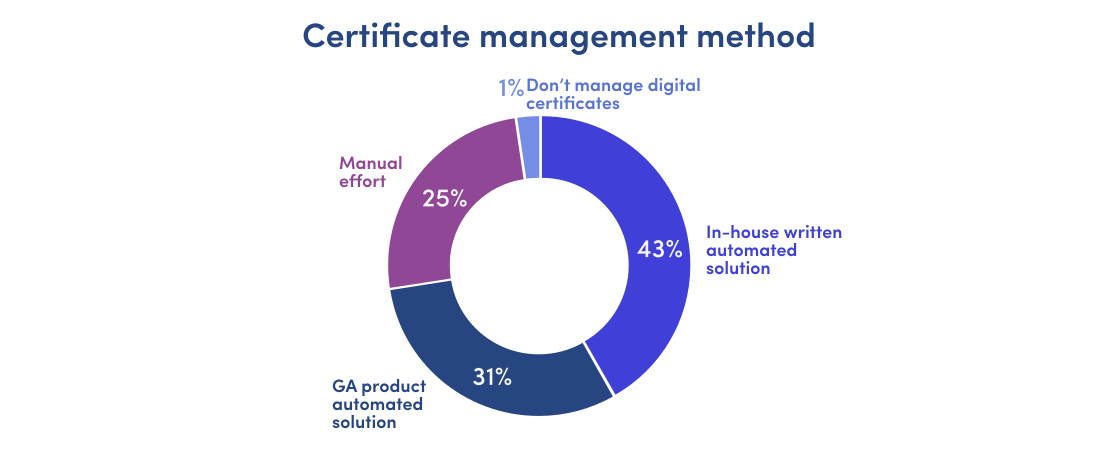
As AI adoption expands and AI agents become more prevalent, leading to a higher volume of certificates requiring management, manual processes are unlikely to scale effectively, while home-grown automation solutions may struggle to keep pace with increasing complexity, evolving compliance requirements, and growing certificate inventories. The exploration and implementation of robust vendor certificate management products is likely to become a key part of successful organizations’ transformation agendas in the near future.
Chapter 05
Ensuring data security
Survey results show that organizations place a high priority on securely and effectively connecting AI to their data, with “data integration issues” ranking as the third-highest concern when implementing AI solutions and “modernizing data management” ranking as the third most important AIOps capability.
A high priority is also placed on protecting that data. Data recovery was the only priority that saw a significant change from last year’s survey, listed by 35 percent of respondents (up 4 percent).
S3 object storage helps address these challenges by storing data in an accessible, scalable format that supports backup, disaster recovery, and regulatory compliance. It also simplifies the conversion of mainframe data into open formats that can be ingested by AI-powered analytics platforms.
Additionally, immutable, air-gapped, off-platform backups provide a secure third copy of data, enabling both ransomware recovery and targeted, surgical recovery. Organizations can restore data, applications, or entire systems from multiple points in time, rather than relying solely on the most recent backup. Together, these capabilities help reduce cyber risk, minimize business disruption, and deliver the operational resilience required by today's digital enterprises.
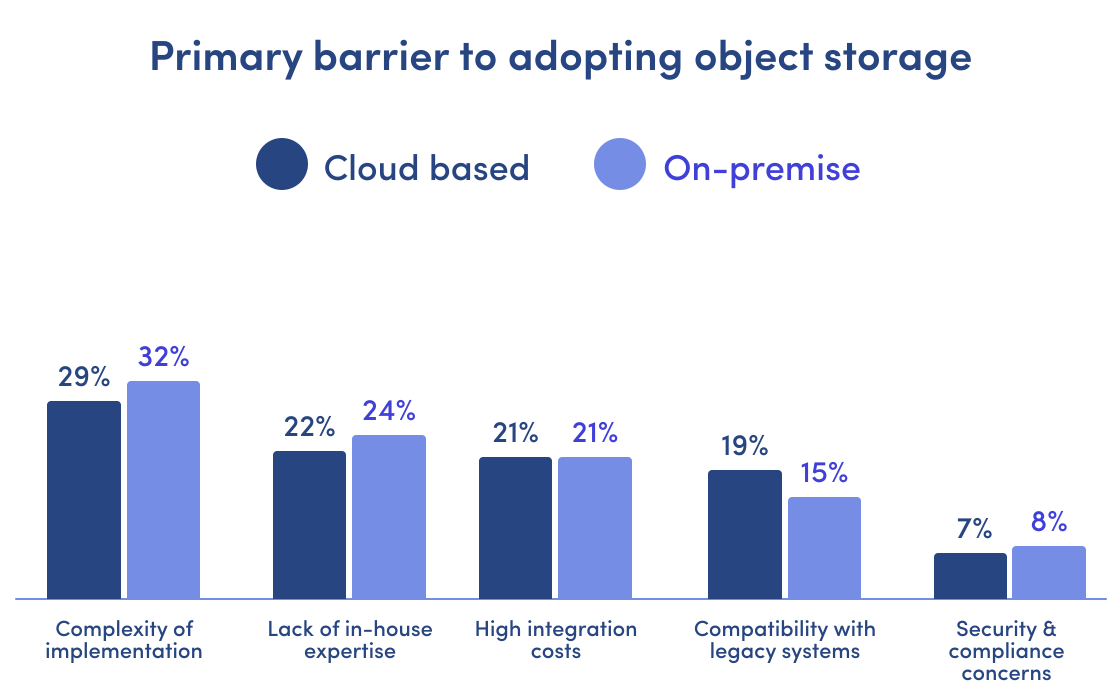
The survey shows, however, that just 52 percent of respondents would consider cloud object storage to improve regulatory requirements, with complexity of implementation and lack of in-house experience cited as the top two barriers to object storage adoption.
To ensure data protection, organizations should focus on real-time threat detection, protecting critical recovery assets, and rapidly restoring trusted mainframe data with near-zero transaction loss. Like certificate management, prioritization of data storage, security, and recovery solutions is likely to increase as data volume increases and more AI solutions access organizational data.
Chapter 06
Where AI delivers on the mainframe
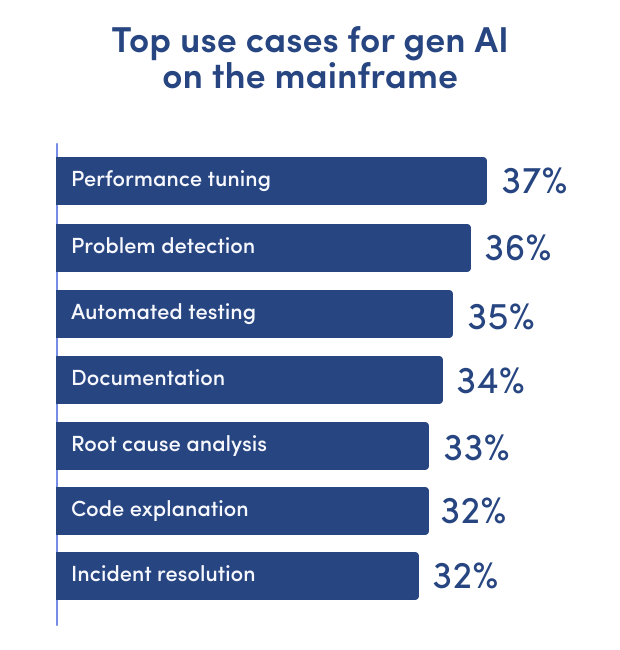
Organizations report use cases for AI across mainframe disciplines. From database reorgs and IMS queue management to performance tuning, problem detection, and documentation generation, enterprises are prioritizing AI initiatives that improve productivity, simplify operations, preserve knowledge, and accelerate modernization.
Agentic AI gaining momentum
Leaders indicate that over the next two years they plan to target their AI investments toward AIOps, application development, and knowledge transfer. But agentic mainframe management is also a top investment strategy, with 40 percent of Leaders indicating that they plan to invest in creating agents to manage the mainframe and 36 percent planning to invest in third-party agents for that purpose.
Chapter 07
AIOps: Steady value, rising hurdles
Mainframe operations are evolving from reactive systems management to intelligent operations. Organizations are increasingly combining AI, automation, observability, and analytics to improve operational awareness, accelerate problem resolution, and proactively manage complex hybrid environments. Seventy percent of respondents report using AIOps only on the mainframe or on both mainframe and non-mainframe systems.
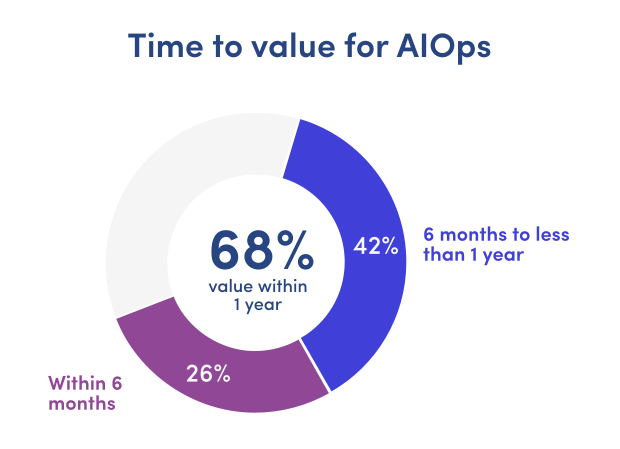
Of those using AIOps on the mainframe, 68 percent of respondents—and 74 percent of Leaders—report seeing time to value within one year.
Finding causes and determining how to fix issues remain the top challenges in mainframe operations. The use of AI, especially GenAI, addresses these challenges directly. It is little wonder, then, that 58 percent of Leaders who prioritize AI technologies name the implementation of GenAI solutions as the most important AIOps capability.
While rules-based logic combined with AI and ML have improved problem detection and even enabled proactive remedies before issues affect service, operations teams are still left to determine root causes and determine fixes. The implementation of GenAI-assisted tools provides operators with the advantage of contextual advice on what actions to take next. These tools ingest past issue resolutions, documentation, and other organizational knowledge to suggest next steps in natural language, acting as a trusted advisor who draws on years of experience to provide clear guidance, regardless of the operator’s experience or skill level.
AI isn't replacing mentoring or experience—it's making both more effective. Alongside mentorship programs and automation, AI gives less-experienced mainframers confidence in their actions and knowledge of past solutions to build upon. Forty percent of respondents are using AI for documentation and knowledge transfer; of those who prioritize staffing and skills and are hiring and training staff to address their needs, 49 percent are choosing to leverage AI assistants.
Organizations seem to be leveraging AI, automation, organizational intelligence, and cross-platform tooling to address the issue of skills gaps.
Chapter 08
Developer assistance
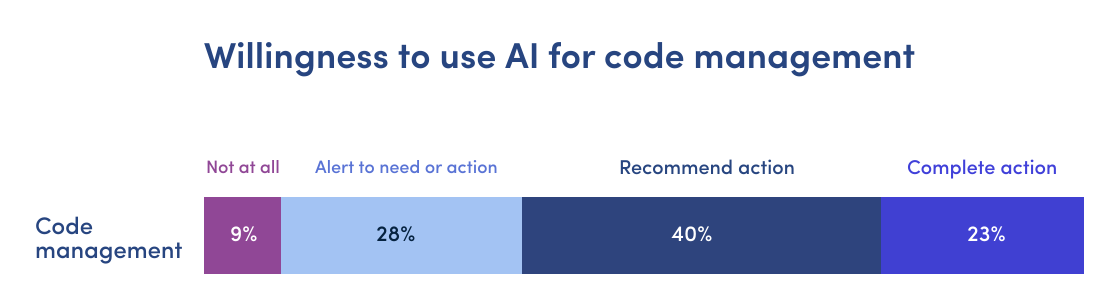
AI is fundamentally changing how organizations develop, understand, and modernize applications, accelerating software delivery by reducing the effort required to understand complex code, generate documentation, preserve institutional knowledge, and modernize legacy applications. When asked about their willingness to use AI to manage tasks, 40 percent of respondents reported that are willing to use AI to recommend actions re lated to code management and 23 percent said they are willing to use AI to complete those actions.
The quest to accelerate application development itself shows no sign of slowing. Leveraging GenAI for developer assistance is the number one capability in which survey respondents plan to invest over the next two years. Improving developer experience was the top additional capability needed to improve DevOps efforts, chosen by 39 percent of Leaders, with improvement of development quality, velocity, and efficiency cited as the leading reasons.
As organizations look to develop new applications and refactor and rewrite existing code, ensuring code quality through testing becomes a paramount concern. When asked what additional capabilities are required to improve their Agile and DevOps efforts, 38 percent of Leaders cited automated testing (ranking just behind improving developer experience).
Organizations looking to take advantage of new technologies with new and refactored applications should not only implement automated testing but also consider tooling that integrates unit, functional, integration, performance, and regression testing into their DevOps toolchains.
Chapter 09
Recommendations
The 2026 BMC Mainframe Survey shows the transformative nature of AI on the platform as it reshapes the mainframe story. That story, though, is still evolving as organizations adjust their approach to the technology, how they employ it on the mainframe, and how they measure its success.
To capitalize on the next wave of mainframe innovation, organizations should focus AI initiatives on measurable business outcomes. By taking a deliberate, value-driven approach to AI adoption, they can accelerate modernization, improve operational efficiency, and turn the mainframe into a lasting strategic advantage.
As organizations expand their use of AI, they should strengthen the governance and security foundations required to support it. Automating certificate management can help reduce risk, improve operational efficiency, and prepare for a future of growing certificate complexity and shorter lifecycles.
AI is accelerating application development and code modernization, but speed without quality creates risk. Organizations must make automated testing a cornerstone of their DevOps strategy to protect system resilience, ensure application quality, and confidently scale innovation.
The 2026 BMC Mainframe Survey shows that the platform is not only vibrant and growing but is also becoming a strategic platform for enterprise AI and digital transformation. AI is redefining the future of the mainframe—not as a replacement for what came before, but as the catalyst for its next era of transformation.
Ready to Accelerate Mainframe Transformation with AI?